
Wendell Berry died on August 31st, at age ninety-two, on the same Kentucky farm his family had worked for seven generations. I heard the news on Facebook through the seminary professor who first introduced me to Berry’s work decades ago. Back then, she assigned his novel, Jayber Crow, and I simply could not put it down.
As the story goes, Jayber loses his parents at a young age, and then he loses his footing in seminary. Instead of striking out to make something of himself, he turns around and walks into one small town to become its barber, its gravedigger, its church janitor, and its quiet and faithful witness.
I discovered Wendell Berry’s poetry, too. “The Peace of Wild Things” has left a lasting impression: a man sleepless with dread, walks out into still water where the heron rests and feeds, and there finds solace in his grief and despair. Land, for Berry, was never a backdrop for sorrow. It was a companion inside of it.
His themes of belonging and rootedness in place were invaluable as I was writing my first book on “the church and the crisis of community.” Berry wasn’t writing about the church, but he was naming a contemporary wound with more clarity than most of the theology on my shelf: what happens to people who never stay any place long enough to know and be known by it.
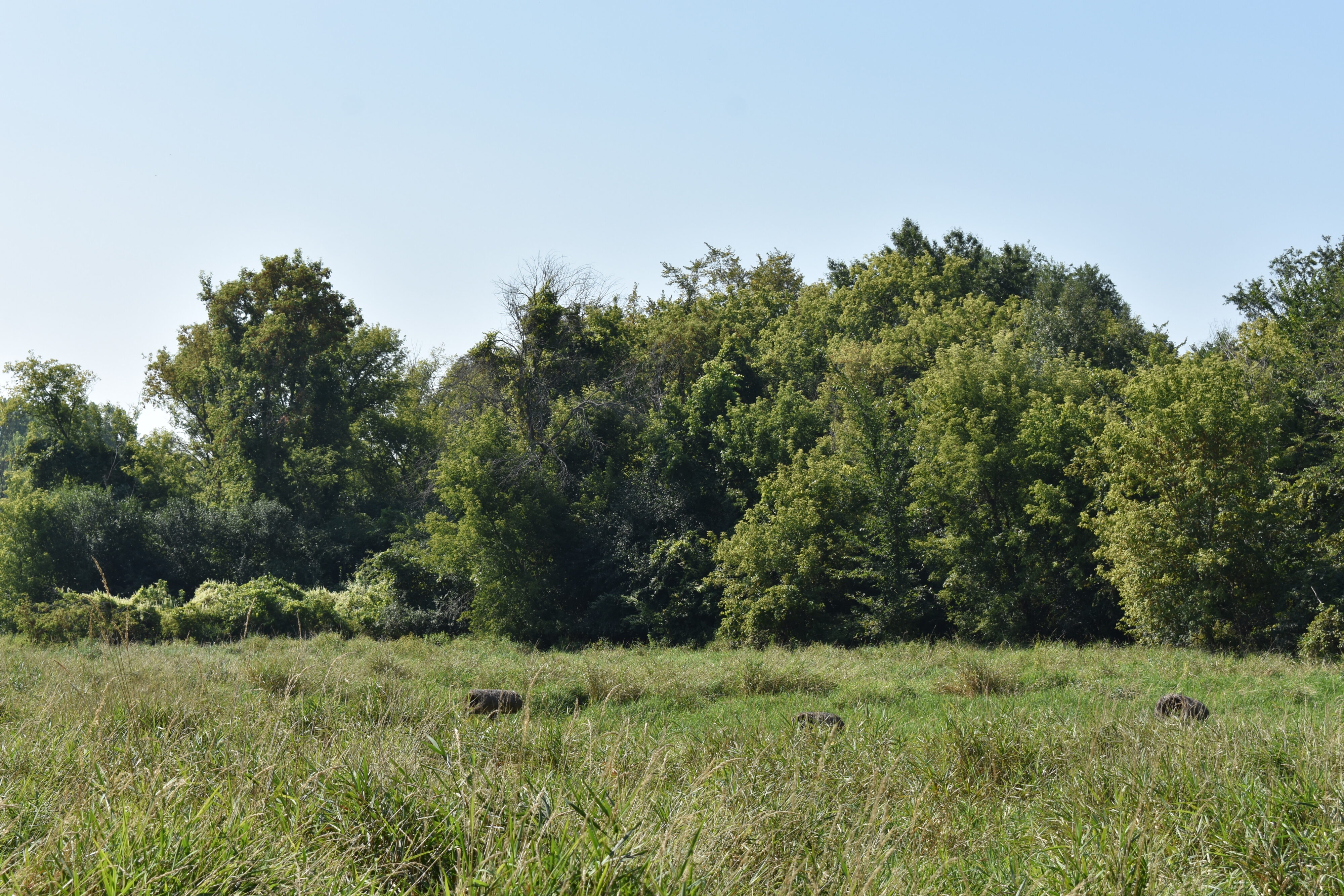
I have now spent almost eight years leading a conference and retreat center set on 151 acres of woods, marsh, and prairie. No mountains. No coastline. The kind of land most people drive through on their way to somewhere else. Early on, I felt the plainness of this land almost as an absence. It’s as if, without knowing it, I had been duped to believe that sacred places announce themselves all at once, like a mountain range from fifty miles away. The prairie does not do this. The marsh does not do this. Instead, they beckon you to stay long enough to notice them, which is the exact discipline Berry spent his life describing.
Throughout this time, I’ve come to marvel at prairie and marsh. I’ve learned that the prairie’s roots reach far deeper into the soil than the grass stands tall above it. These roots hold the ground together in a way that is completely hidden to the mere passer-by. The marsh is also unique. It is neither land nor water, easy to dismiss as waste because it refuses to be captured in a single category. Both are ecologically diverse (teeming with a multitude of creatures who not only live inside them but also constitute them) – a constant reminder that we all belong to God’s creation.
Norman Wirzba, a theologian and longtime friend of Wendell Berry’s, recently wrote that Berry’s whole body of work returns us to our creaturely condition; the trouble is we don’t want to be creatures at all. We want to throw off the limits of our finitude and exempt ourselves from the daily care for a particular place. Yet humility comes from knowing and accepting ourselves as earth creatures. From the Latin humus, humility is a word for soil, ground, the very thing beneath our feet on the prairie trail and marsh walk at Mount Olivet Conference & Retreat Center.
Eight years is long enough to watch the prairie change with the seasons – and even burn to the ground a few times. Long enough to watch a guest arrive skeptical and leave unable to explain what happened to them here. Long enough that I no longer feel the nagging pull toward a more spectacular setting—not because mountains lack grandeur, but because the prairie has trained me to stay and see what’s hidden, and then to marvel. That is a life skill: noticing what’s hidden. Relishing what’s ordinary. Living gladly inside a creatureliness that doesn’t announce itself.
And so, may we learn what Berry spent a lifetime learning on one Kentucky farm: that grandeur may announce itself, but sacredness rarely does. That the ground beneath us is not merely scenery but teacher, binding us to a particular people as surely as to a particular place. That the humility we need and the community we long for have been waiting, all along, in the dust we are made of.
Discover more from Mount Olivet Conference & Retreat Center
Subscribe to get the latest posts sent to your email.
Lovely. 🥰
This descriptive witness of MOCRC living treasure creates an inspiring awareness, for me, with which I can share with others, impact of God’s creation, a resource available to all! Thankyou!
This descriptive witness of MOCRC living treasure creates an inspiring awareness, sharing with others, impact of God’s creation, a resource available for all! Thankyou!
Ah, Theresa, I was so drawn to the words excerpted in the opening page on your website, that I eagerly clicked on the “learn more” link. I was wondering, “oh how wonderful that Theresa has found someone to write about our beloved Wendell Berry!” And then I discovered it was YOU! I laughed out loud with delight when I read about the seminary professor who had introduced you to Jayber Crow! I love the tribute you have written. He has deepened and inspired so many lives. Our own local CSA farmer was inspired by Wendell Berry’s writings to become a farmer himself. The extraordinary gifts he shared with the world through his poetry, essays, novels and short stories keep multiplying into future generations. I give thanks for him every day.